Admixture Accelerators enhance the solidification or hardening rate, and advance strength-gain of concrete for earlier formwork demolding. We carry regular and non-chloride water-reducing, accelerating admixtures. The non-chloride admixture meets the requirements of ASTM C494 Types C and E and is utilized where high early strength is requested yet the use of calcium chloride is prohibited. Both accelerators provide increased early strength and accelerated set times.
We utilize an air-entraining admixture that is an aqueous solution of organic materials and complies with ASTM C260. Air entrainment improves durability, workability, and placeability. It aids concrete that is subject to freeze-thaw cycles.
We utilize an admixture to control alkali-silica reactivity when specified and the use of a pozzolan is prohibited. This admixture reacts with alkali silica gel that can form in concrete; the gel now containing lithium ions does not have the tendency to swell and expand in the presence of moisture and thereby minimizes deleterious expansion cracks due to ASR.
We utilize a calcium nitrite-based admixture designed to inhibit the corrosion of steel in reinforced concrete. The corrosion inhibitor fortifies the ferric oxide passivating layer prior to the penetration of chlorides. The nitrate ions convert ferrous oxide to more resistant ferric oxide which protects the steel reinforcement from corroding.
We utilize a non-chloride hardening accelerator to increase the early strength of concrete without affecting the initial workability. This hardening accelerator is approved and used by DOTs for applications where roadways must be re-opened the same day the concrete is poured.
We carry a variety of different manufacturers and types of fibers, from micro-fibers designed to help mitigate plastic shrinkage cracking to macro synthetic/synthetic fibers used for secondary reinforcement, eliminating welded wire mesh to steel fibers used in industrial foundations and slabs. All of our fibers conform to ASTM C1116.
We utilize a new generation water reducing admixture that is made with polycarboxylate polymer technology. Our mid-range water reducer meets the requirements of ASTM C494 Types A and F as well providing 10-15% water reduction.
We carry a water-reducing, retarding admixture that complies with ASTM C494 Types B and D. Retarder is effective in offsetting the accelerating effects of high ambient temperatures, initial set time delay, and mass concrete pours.
We use a shrinkage reducing admixture to produce high performance concrete with greatly reduced drying shrinkage. Laboratory tests show that shrinkage utilizing this admixture can be reduced by as much as 40%.
We utilize a densified dry powder micro silica admixture that meets the requirements of ASTM C1240 and contains a minimum of 85% silicon dioxide. The silica fume admixture dramatically increases compressive and flexural strength, reduces permeability, and increases durability and resistance to corrosion.
We utilize a new generation, high range water reducing (HRWR) and superplastizing admixture that is made with polycarboxylate polymer technology. This HRWR provides excellent plasticity while maintaining slump for up to 90 minutes. Our HRWR meets the requirements of ASTM C494 Types A and F as well providing up to 45% water reduction at high dosage rates.
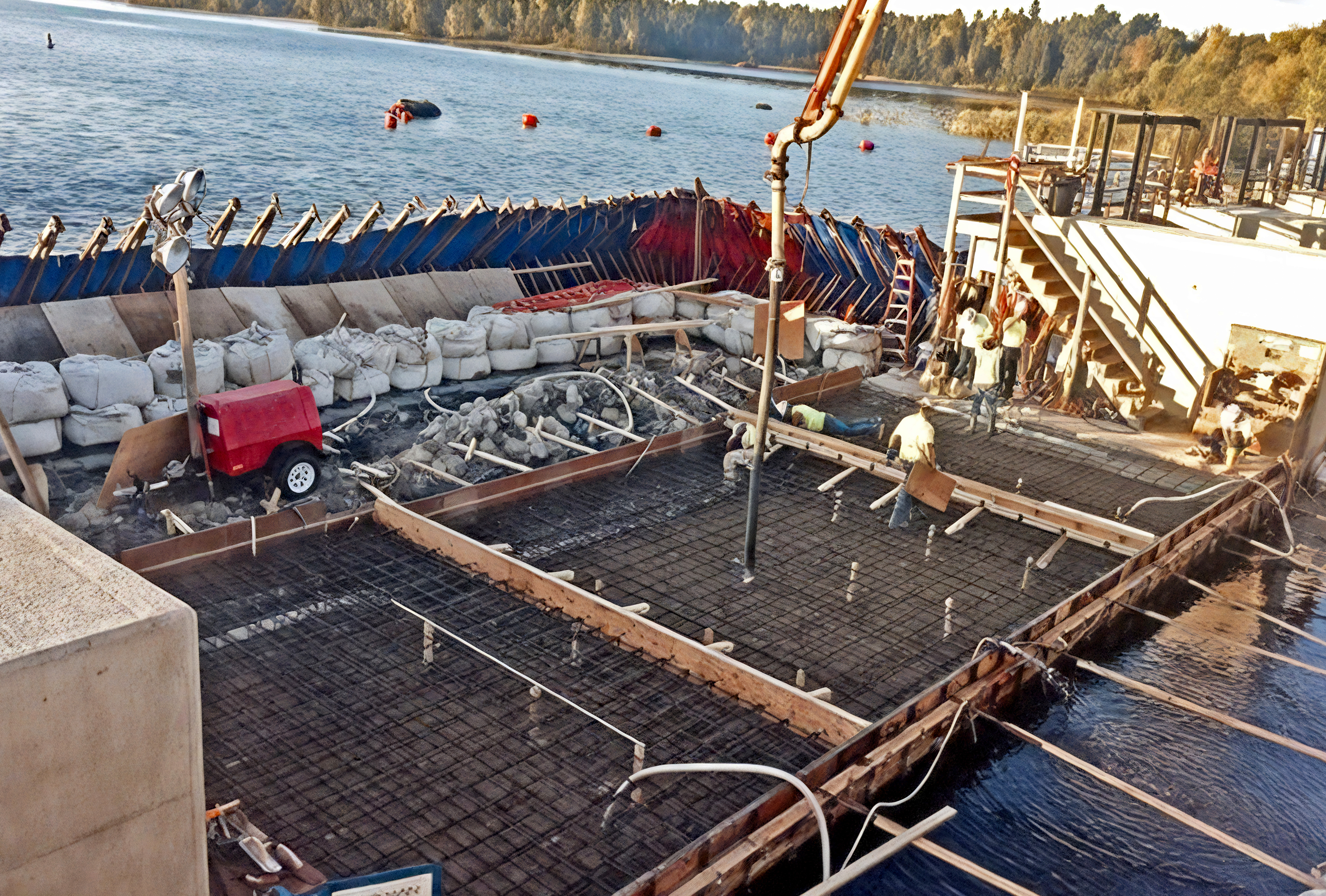
We utilize an anti-washout biopolymer admixture for underwater placement of concrete and grout that meets the requirements of RD-C661-06. This admixture can be used in both fresh and salt water and can reduce or eliminate dewatering cost.
We utilize a liquid-based viscosity modifying admixture to improve stability and segregation resistance in high slump applications to include our SCC mix designs.
We utilize a variety of manufacturers and types of integral waterproofing admixtures. The waterproofing admixtures are added at the time of batching; therefore, it is not subject to climatic restraints. The waterproofer fills the pores and capillary tracts in the concrete so that the concrete becomes permanently sealed against the penetration of water or liquids, and is protected from deterioration due to harsh environmental conditions.
Contact Us Today
The Choice of Industry Leaders