
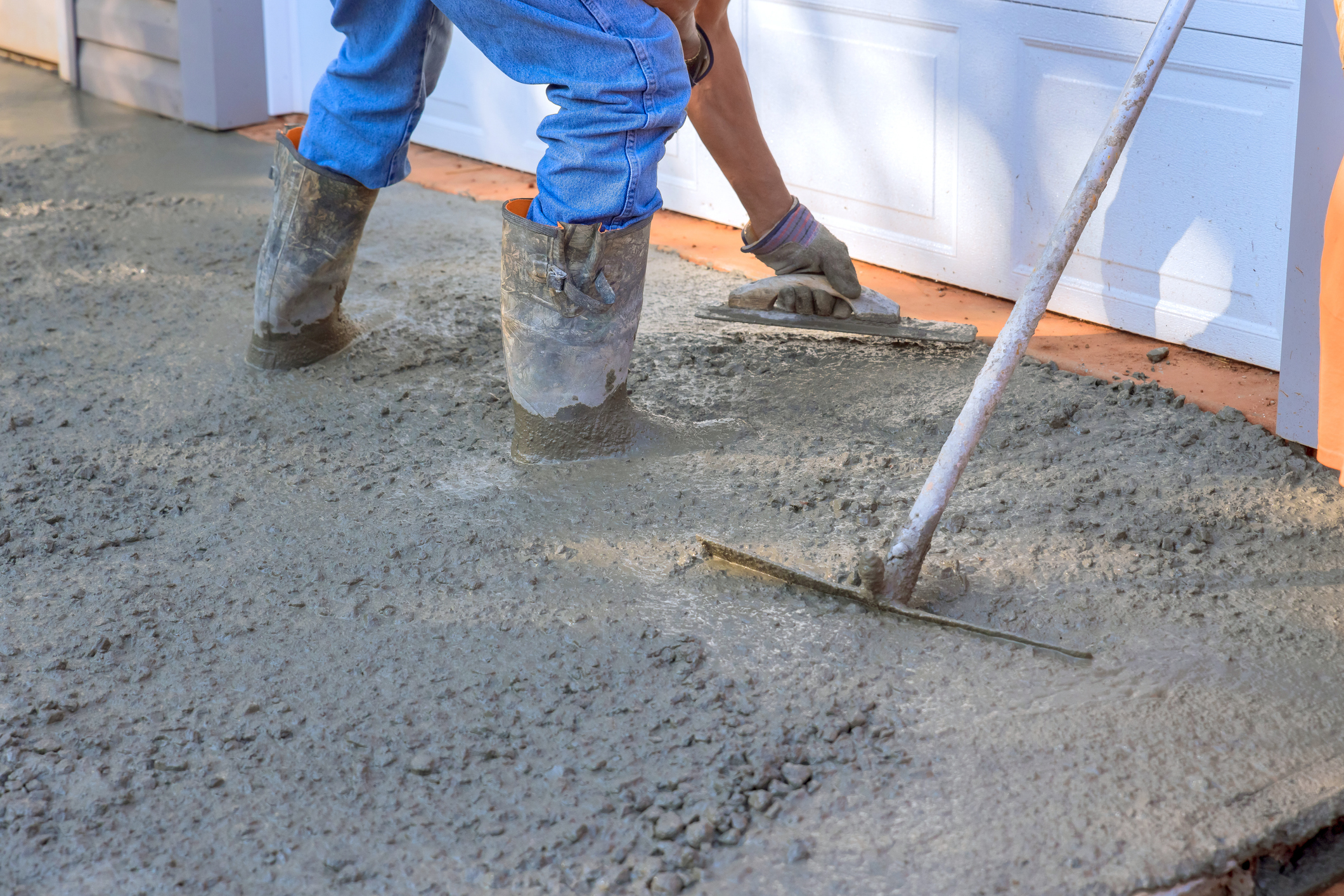

Blisters are hollow, low-profile bumps on the concrete surface, typically from the size of a dime up to 1 inch (25 mm), but occasionally even 2 or 3 inches (50 – 75 mm) in diameter. A dense troweled skin of mortar about ⅛ in. (3 mm) thick covers an underlying void that moves around under the surface during troweling. Blisters may occur shortly after the completion of finishing operation. In poorly lighted areas, small blisters may be difficult to see during finishing and may not be detected until they break under traffic.
Blisters may form on the surface of fresh concrete when either bubbles of entrapped air or bleed water migrate through the concrete and become trapped under the surface, which has been sealed prematurely during the finishing operations. These defects are not easily repaired after concrete hardens.
Blisters are more likely to form if:

The finisher should be wary of a concrete surface that appears to be ready for final finishing before it would normally be expected. Emphasis in finishing operations should be on placing, striking off and bull floating the concrete as rapidly as possible and without working up a layer of mortar on the surface. After these operations are completed, further finishing should be delayed as long as possible and the surface covered with polyethylene or otherwise protected from evaporation. If conditions for high evaporation rates exist, place a cover on a small portion of the slab to judge if the concrete is still bleeding. In initial floating, the float blades should be flat to avoid densifying the surface too early. Use of an accelerating admixture or heated concrete often prevents blisters in cool weather. It is recommended that non-air entrained concrete be used in interior slabs and that air entrained concrete not be steel troweled.
If blisters are forming, try to either flatten the trowel blades or tear the surface with a wood float and delay finishing as long as possible. Under conditions causing rapid evaporation, slow evaporation by using wind breaks, water misting of the surface, evaporation retarders, or a cover (polyethylene film or wet burlap) between finishing operations. Further recommendations are given in ACI 302.1R and ACI 305.