


ASTM terminology defines corrosion as the chemical or electrochemical reaction between a material, usually a metal, and its environment that produces a deterioration of the material and its properties. For corrosion of steel, oxygen and moisture are required for the electrochemical reaction to occur. Corrosion results in the formation of rust that has two to four times the volume of the original steel and none of its good mechanical properties. Corrosion also produces pits or holes in the surface of reinforcing steel, reducing strength capacity as a result of the reduced cross-sectional area.
Structural concrete uses reinforcing steel where tensile stresses are anticipated. This provides structural capacity to members subjected to tensile and flexural loads due to traffic, winds, dead loads, and thermal cycling. However, when reinforcement corrodes, the larger volume of rust formed leads to internal stresses and subsequent delamination and spalling of the concrete cover. Reduction in the cross-sectional area of steel reduces the structural capacity of the member. If left unchecked, the integrity of the structure can be affected. Corrosion is especially detrimental to the performance of tensioned strands in pre-stressed concrete as failure can be catastrophic.
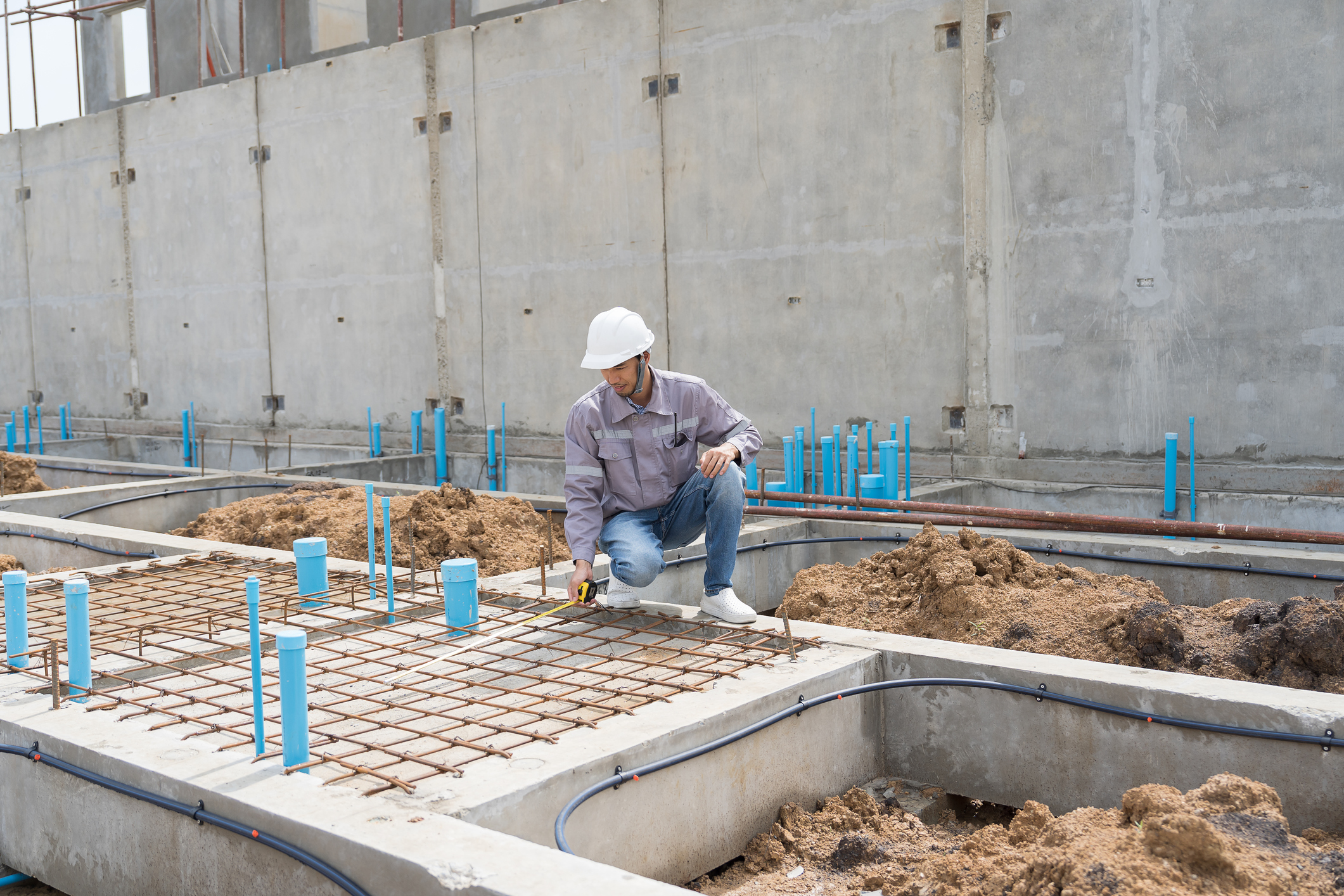
Steel embedded in concrete is in a non-corroding, passive condition because of the high alkalinity (pH>13) within concrete. However, when water-soluble chlorides are present, the passive layer protecting steel is disrupted and corrosion begins. Chlorides can be from external sources for concrete exposed to severe environments, like sea water or when deicing salts are applied, or from internal sources, primarily from materials used to make concrete.
Carbonation of concrete is another cause of steel corrosion. Atmospheric carbon dioxide reacts with lime in the concrete to form calcium carbonate. This reaction reduces the alkalinity of the concrete that protects the steel. When the pH at the level of the reinforcing steel falls below 9, corrosion begins. Chloride-induced corrosion is more common than that resulting from carbonation.
Corrosion is aggravated by factors including moisture, high temperatures, cracking, stray currents and galvanic effects.
Corrosion prevention strategies should ensure that reinforcing steel is embedded in good quality concrete with the minimized potential for chloride exposure and carbonation.
ACI 318 Building Code for Structural Concrete establishes exposure classes related to corrosion of reinforcing steel:
• C0—Concrete that will be dry in service
• C1—Concrete that will be exposed to moisture in service
• C2—Concrete that will exposed to moisture and an external source of chlorides in service
For exposure class C2, ACI 318 establishes a maximum water to cementitious materials ratio (w/cm) of 0.40 and minimum specified strength of 5000 psi. No w/cm limit is set for exposure classes C0 and C1 because penetration of external chlorides is not a concern. Good quality concrete, however, reduces the rate of carbonation.
Chloride limits are established for internal sources of water-soluble chlorides based on percent by weight of cement. For reinforced concrete, the limits are 1.0% for C0; 0.3% for C1; and 0.15% for C2. For pre-stressed concrete the limit is 0.06% for all exposure classes. Water soluble chlorides are measured in accordance with ASTM C1218 on powder specimens extracted from concrete cylinders at an age between 28 and 42 days.
Adequate cover over reinforcing steel is necessary. Increasing cover reduces the rate of chloride penetration and carbonation exponentially and delays the onset of corrosion. Minimum cover requirements in ACI 318 should be increased for concrete exposed to corrosive environments. Concrete containing larger aggregates require more cover. Adequate reinforcement should be provided to keep cracks tight. ACI 224 provides guidance to minimize the formation of cracks. Allowable crack widths for concrete exposed to chlorides are about 0.006-in. Adequate drainage of water away from concrete members should be ensured.
Chloride ingress can be reduced by using membranes and sealers. Onset of corrosion can be minimized or delayed by using corrosion resistant reinforcement, such as stainless steel, galvanized steel and epoxy-coated steel.
Life-365 is available software that models the expected service life and costs of different corrosion protection strategies. It can be used to demonstrate lower life cycle cost with higher initial cost of some options.

Quality concrete with a low permeability slows down the penetration of chloride salts and the development of carbonation. Low permeability can be obtained with a lower w/cm ratio in the range of 0.40 to 0.50. A w/cm much less than 0.40 may result in problems with placement and increase the potential for thermal and drying shrinkage cracking. Another factor that reduces the permeability of concrete is the use of supplementary cementitious materials (SCM). Typical dosage in percent by weight of cementitious materials is 5% silica fume, 25% fly ash and 50% slag cement and combinations thereof. Low permeability of concrete mixtures can be demonstrated by indicator tests. Excessive cementitious materials increases the volume of paste and the potential for cracking. Concrete materials should not contribute chlorides to the mixture that exceed the chloride limits. Concrete exposed to freezing should be air-entrained.
Corrosion inhibiting admixtures delay the onset of corrosion. Water repellent materials may reduce the ingress of moisture and chlorides to a limited extent in low permeability concrete.

Delamination, cracking and scaling accelerate corrosion of reinforcing steel. Placement and finishing should be properly scheduled with adequate crew and resources. Concrete must be adequately consolidated and cured. Curing should be performed preferably for at least 7 days. Concrete temperature should be maintained above 50°F. Early-age curing is especially important for concrete mixtures containing SCM. Numerous studies show that concrete porosity is reduced significantly with increased curing times and, correspondingly, corrosion resistance is improved.
